The European Way to Die
Published:
An article on euthanasia and assisted suicide written by Michel Houellebecq, and translated by Robyn Creswell. (Cover image source.)
The game
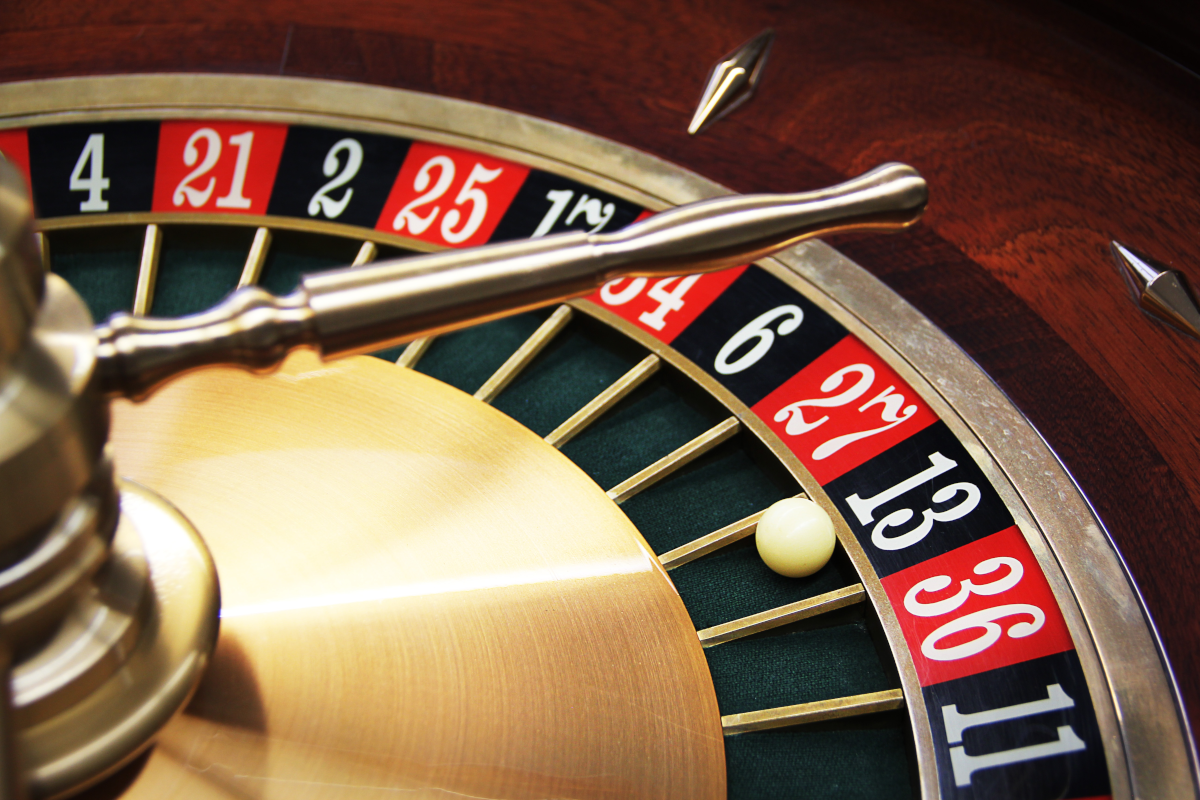
From my point of view life is, essentially, a game. You are born in a casino and the very first thing you do is spinning the roulette; there is no skill, no wisdom, no experience at play—you can not choose the parents you are born to, the place you are born at, or the times you are born in. You spin it, or—which is probably a more accurate way of describing the situation—it is spun on your behalf by your parents.
The marble lands on a number, you see what cards you have been dealt in the game of life, and you try to make the best of it, you try to stay in the game as long as possible... until the house inevitably kicks you out.
However, this is not the only approach you can take.
Barring some exceptional situations, no one is forcing you to play the game. For the most part, no one is setting win conditions either, as the game is meant to be played, but not won (it cannot be won by design, the house ultimately kicks every single player out). There are, of course, rules specifying the proper ways to play, but you can skirt them too; if you are lucky they become mere suggestions rather than ironclad laws.
Once you realise this, interesting possibilities present themselves.
The way to play
On the other hand, Mark Zuckerberg rose in my esteem (not hard to do) when I learned that he had decided to eat no animals except those he killed himself. It’s a commitment we might suggest (or require?) for everyone who mocks vegetarianism. The same goes for proponents of the death penalty. Wouldn’t it be interesting to enlist a firing squad composed of the jury who voted for capital punishment? (I’m sorry to leap from animals to people, but it’s basically the same question.) I’m not a convinced vegetarian, nor am I resolutely against the death penalty, but I do believe we should accept the consequences of our choices.
I think the last phrase is especially salient, for I, too, believe we should accept the consequences of our actions. What I am resolutely against is accepting the consequences of other people's actions, or choices that were not our own.
Bringing the above statement to its logical conclusion would mean putting aside such fundamental rules as "you shall not murder", so let me make it absolutely clear that I am not advocating for the extreme, fundamentalist interpretation. In this matter, I am very much a moderate of the live-and-let-live persuasion.
I cannot in one breath say that I refuse to accept the consequences of other people's actions, while in the next asserting a right to murder. This is equivallent to saying that the other person must accept the consequences of me murdering them, but the other is as entitled to as much freedom and independence as I am. Therefore, murdering other people is out of the question. (Notice the adjective, though.)
Having said all this, I am ready to make my point.
The way to play is to do whatever the fuck you want, as long as you are not affecting other people with the consequences of your actions.
As far as I undertand—and I under no circumstances claim to understand far or deep—this is the essence of laveyan satanism. If you read the Satanic Bible and discard all that esoteric mumbo-jumbo about magic, gods and devils, angels and demons, and focus on the parts that are applicable to mundane, daily life the message seems to be clear. Life is the greatest value, joy is the greatest gift; do whatever you can to maximise yours without negatively affecting the life and joy of others. Personally, I find this a surprisingly affirmative and positive message, dressed in edge-lord clothing.
I also find it truly interesting that the founding father of modern satanism and a French writer known for his nihilism and misanthropy, people whom you could well expect to say "to hell with life!" firmly disagree with suicide—both of the assited and the do-it-yourself variety.
The house always wins
Back to the casino analogy.
Some people gamble and win. Casinos have to sometimes let people go away from the table or the slot machine with a big handful of chips to keep up the illusion and feed the dreams of the people coming to play. Despite this exceptional cases, in the grand scheme of things, on average over a long enough time, the house always wins.
Life is similar. It is an undeniable fact that there are successful people, those who seem to be winning at life: the rich, the beautiful, the influential, the powerful, etc. I would say that another undeniable fact is that not everyone will, or even can, reach the stage where they are considered to have achieved the typical win conditions.
The question is: do you want to reach that stage?
Here is my take on it: I can change neither the rules nor the state of the game. It would be pointless to try (or the cost is simply too high to justify the outcome). What I can change are what I consider to be win conditions to something achievable; I can decide for myself what it means to be winning at the game, and try to reach that goal instead of the standard one.
This will sound terribly unrefined, but bread and circuses are a much more achievable goal than caviar and symphonies. To be honest, as long as I have a roof over my head, am not hungry, am not cold, and am not dying of boredom... I would consider it a pretty alrightish situation.
Is it the best outcome possible? Certainly not. Is it one that can be achieved with a reasonable amount of effort? Certainly yes.
Everything forces one to play according to house rules. Nothing prevents one from rejecting house win conditions; you can just say "I take $100 to the casino, and just leave when I lose them" and have a good time while the money lasts.
The goal is not to have everything; the goal is to have enough.
To reiterate, you cannot change the rules, but you can change the win conditions, and you can decide to leave the casino.
Leaving the casino
Here is where I disagree with Houellebecq and LaVey. I consider the right to suicide, and by extension euthanasia, a fundamental one—if we cannot control anything else, we should at the very least be able to control the fact whether we exist at all. Houellebecq even quotes Nietzsche in his article:
As Nietzsche writes in Beyond Good and Evil, “The thought of suicide is a great consolation: by means of it one gets successfully through many a bad night.”
Later, Houellebecq refers to a short story by Richard Matheson titled "The Test". Let me quote him once more:
In the world of the story, old people are given regular competency tests that they must pass in order to avoid being put out of their misery. Meanwhile, their descendants sit at home, quietly hoping for the result that will free them from the burden of the aging. Once you have read “The Test,” it seems to me, there is nothing more to say against euthanasia; the story says it all.
He is right, the story says it all. What that "all" is depends on who is reading the story. Through the eyes of someone who holds Houellebecq's opinion, the story must be incredible depressing, cruel, and inhumane. There is one crucial detail our favourite French writer omits, though, and it is precisely the detail on which the interpretation of the story hinges.
As I have said in another post, I know what life infected by dementia looks like. I can empathise with the younger characters in "The test" and, probably contrary to Houellebecq, I have no problems identifying with them—because I have been in their situation. One is free, of course, to interpret the story as depicting a cold, mechanical system that pushes people who have outlived their usefulness to society to suicide. The story is not exactly subtle here.
On the other hand, one can also interpret the story as depicting a man who instead of trying to win against the house decides to change what the game is about. The whole story leads to the day the older man has to take the dreaded test; but on that day, the man decides to instead go for a walk, enjoy the day, and in the evening kills himself. On his own rules.
I wholeheartedly agree with Houellebecq: the story says it all. It shows the importance of being able to walk away from the table and leave the casino on one's own rules and of one's own volition, after one sees that the game is stacked against them to the point when it is no longer worth to play.
떡볶이 (tteokbokki)
In a completely non-European conclusion, if the above line of thinking ever starts sounding too reasonable, if it becomes too tempting to leave the casino... eat some tteokbokki. The recipe presented in the book is, in my opinion, not a good one, but you can prepare tteokbokki in a way that makes staying in the casino worth it, even if just for one more day.
And on the next day you just make them once more.
Is it easy?
No.
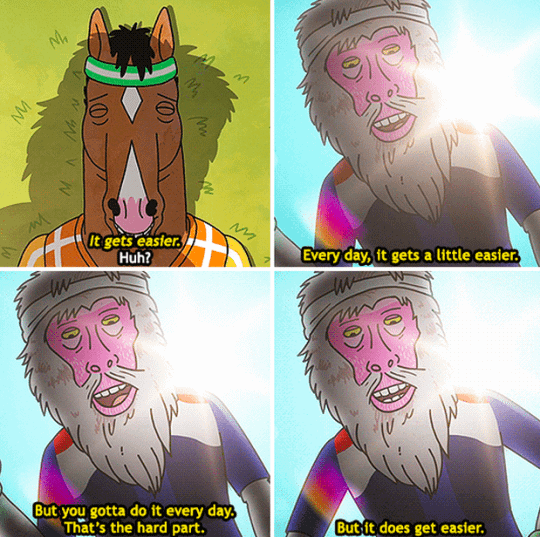
But it gets easier. You just have to do it every day. That is the hard part.