I Play Rocky (2026)
Published:
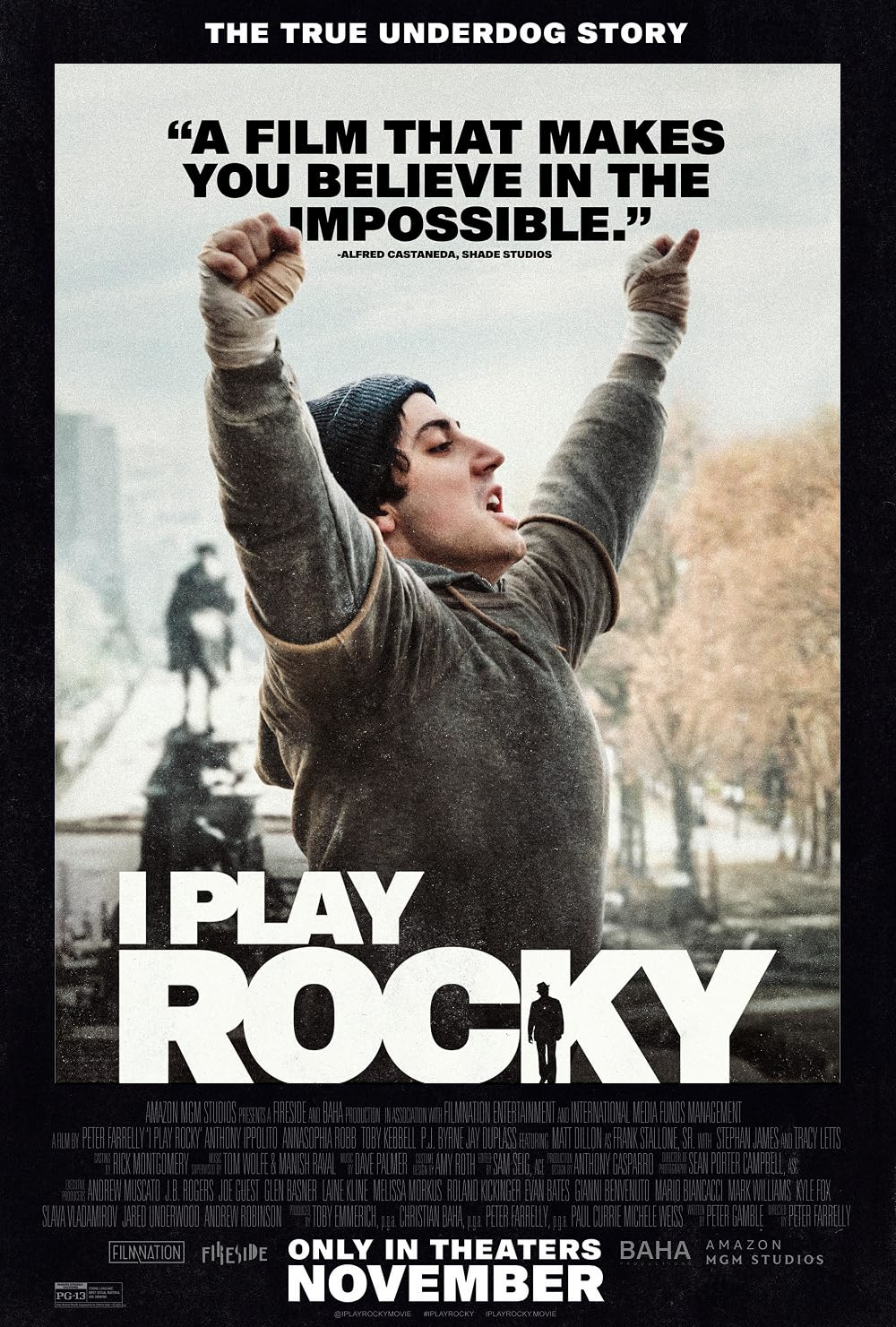
I went to the cinema today to see I Play Rocky.
I think it is a pretty good film. It shows the value of perseverance, occassional stubborness, and sticking to your guns. It is also a classic from-zero-to-hero story. I am a sucker for those, despite knowing that in real life you rarely have enough luck to be able to actually pull something like that off; but in the realm of storytelling some suspension of disbelief is expected, so all is well.
I liked the film, I encourage you to go see it too, and that is it.
Interpersonal relationships
I want, however, mention two things that stood out to me vis-a-vis the one romantic relationship in the film ie, Sylvester Stallone's and Sasha Czack's marriage. (This is the reason why I added the "love" tag to a post about a film about a boxing film. While it is not the main subject, it is a topic that is difficult to overlook in I Play Rocky.)
On being supportive
One aspect of the film that I have really enjoyed watching was the support young Stallone, played by Anthony Ippolito, was shown to receive from his wife Sasha, played by AnnaSophia Robb. I know this is a bitter remark, but it is something too rarely seen nowadays: men and women in relationships and supporting each other, instead of locked in perpetual war of the sexes. Good job, film.
While being very much her own person, she is shown as caring for her husband, supporting him when he was writing, when he was acting on set, and when he was doubting himself. She was there, being a pillar he could lean on, a rock upon which he could build his dream, to paraphrase a well-known book.
On being considered
On a similar note, it was so funny to see how at one point Sasha gets angry with Stallone, because he did not tell her about the negotiations with the producers and the $300'000 cash offer he got from them, and a good husband discusses things with his wife instead of hiding them from her, and together they make a decision that is best for the family.
However, when he later asks her about what she thinks he should do—take the cold, hard cash; or follow his dream of being an actor—she tells him that it is not her decision to make, but his. Surprised and confused, Stallone asks her why is she refusing to discuss it with him now, when earlier she got angry with him for not doing exactly this. She tells him that no matter what she says, he may end up unwittingly blaming her if things go wrong, and she would rather avoid that by leaving the decision to him; she only wanted to feel included in the process.
I think it brilliantly shows the difference between the way men and women think about problems and decisions. It is a generalisation, sure, but in my experience not one completely removed from reality. It also rings similar to the advice that when someone comes to you to talk about a problem, a good question to ask them is "do you need solutions, or do you just need to bitch about it for a while?" because depending on what the other needs, the approach you should take is wildly different.