The Death of Cleaopatra (1890)
Published:
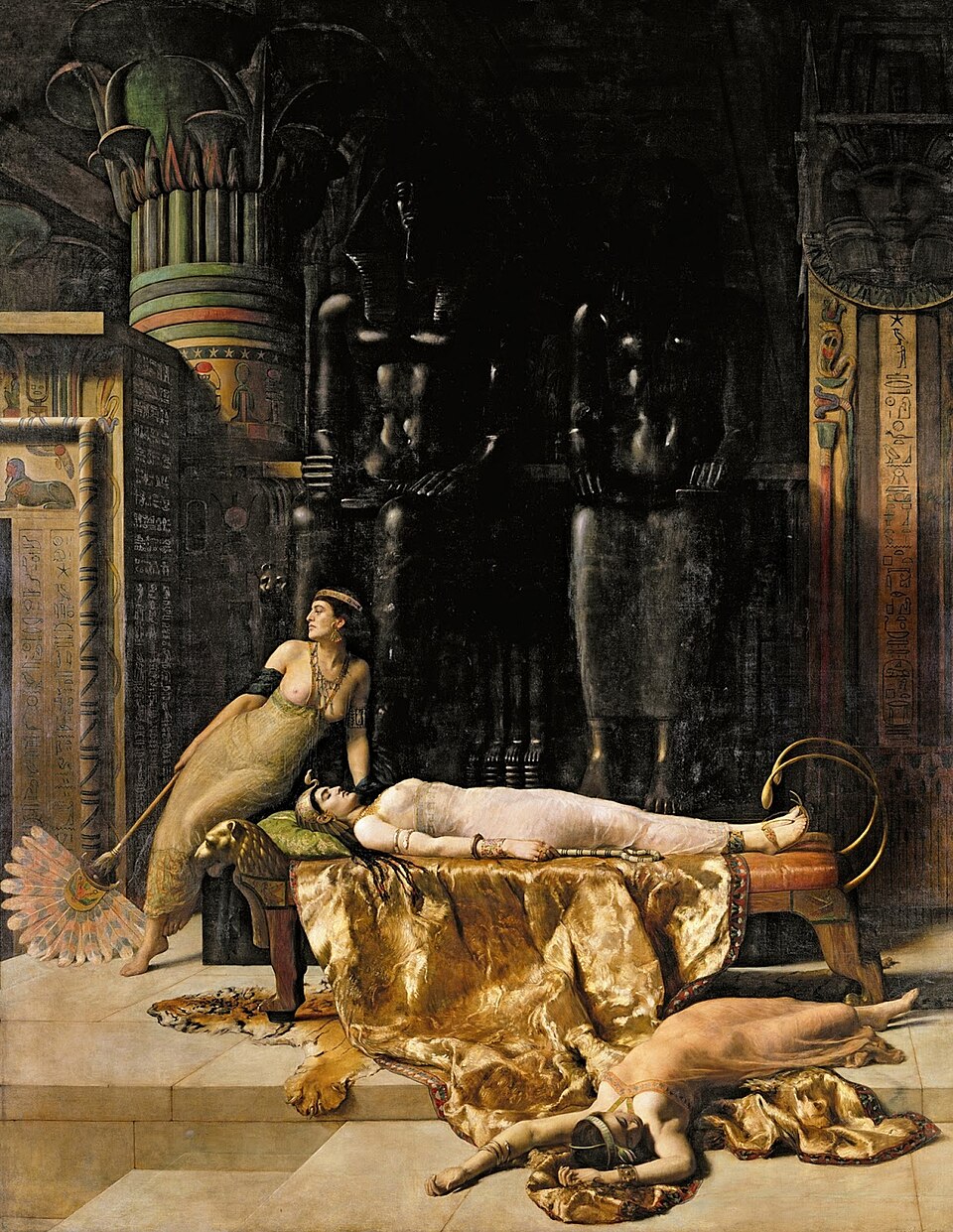
The Death of Cleopathra is a 1890 painting by John Collier.
It could not have been the intention of the painter, but I can't avoid thinking that it would be a perfect illustration for a sword-and-sandal novel, or for a fantasy role-playing game adventure book. Think Conan entering a kingdom, seeing that the queen committed suicide or has been poisoned, and deciding to deal with the evil sorcerer who pushed her to do it.
The depicted scene is not part of a fantasy story, but rather a historical event; there was no evil sorcerer involved in Cleopatras suicide. However, what we think of as "fantasy" or "sword-and-sandal" is inspired by our more or less distant past.
Pulps in the dark
The two black figures in the center of the picture, partially obscured by deep shadows, are an especially puply element. Every other element of the scene is well-lit, every other shadow is natural. The two figures towering over Cleopatra's dead body are almost completely unaffected by the light that shines on everything else, as if coming from another world...
If we wanted to get puply, now would be the perfect moment for that, because what possible reason would the two darkness-clad figures have for being here? Are they ancient pharaohs, who came to welcome the deceased empress in the afterlife as one of their own? Are they gods who came to pass judgement on her? Are they demons who came to seize her soul at the behest of an evil sorcerer?
Statues of black stone
Black figures coming alive are not a particularly uncommon element in sword-and-sorcery stories. The most well-known one is probably Rober E. Howard's Iron Shadows in the Moon, a short story set in Conan's world, published in 1934. In Howard's story, statues of black stone come alive under the moonlight to hunt people who happen to be present at the ruins where the statues reside.
Another example of silent, supersized figures are the Engineers from Prometheus, a 2012 entry in the Alien franchise.
A being shrouded by shadows
Shadows inexplicably covering something, or someone, are also not a unique element. One instance where this exact thing has been used to a great effect was the cinematic masterpiece Desperado, a 1995 film by Robert Rodrigues, starring Anotnio Banderas, Salma Hayek, and Steve Buscemi.
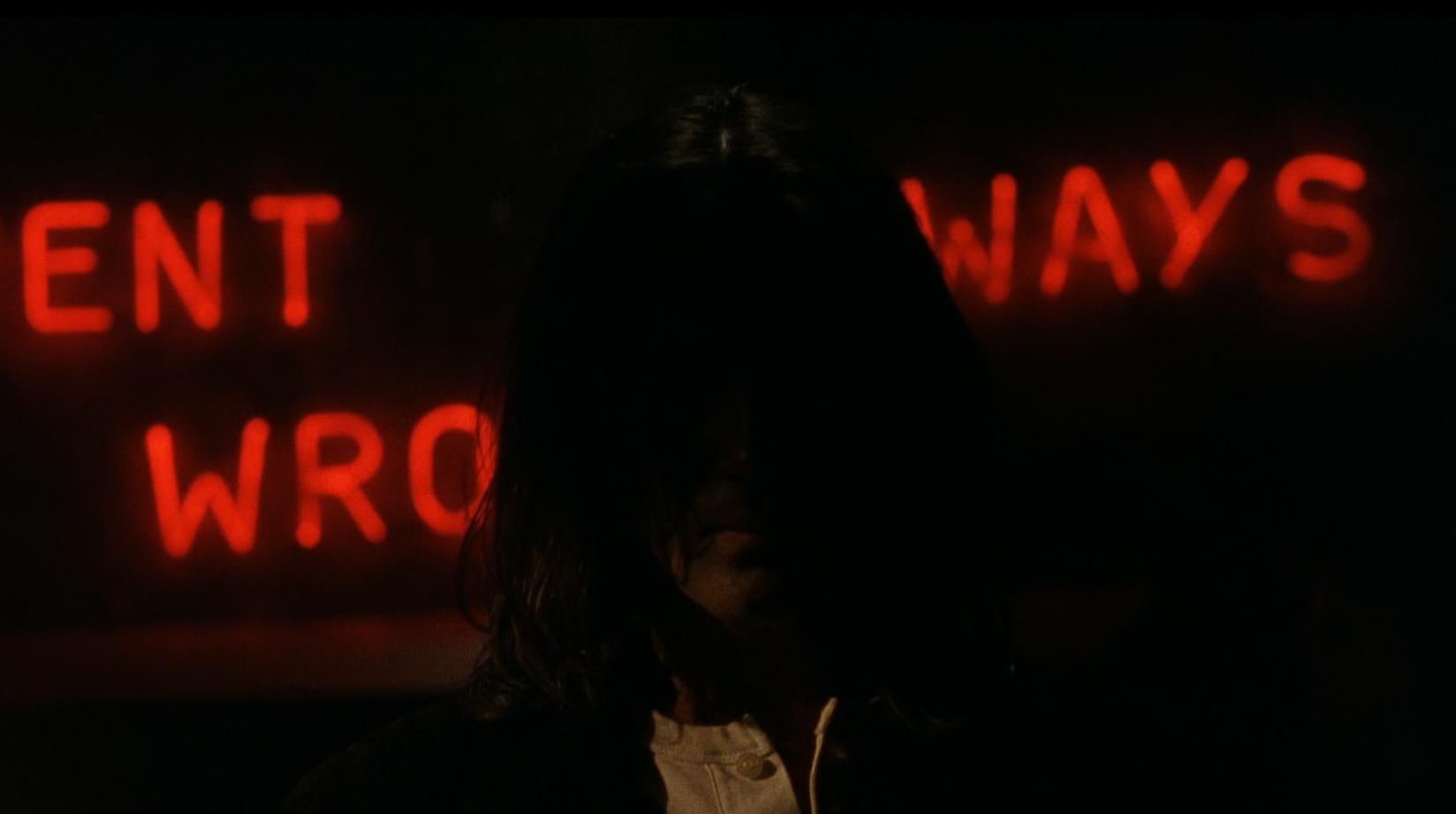
In the opening sequence, this is how the main character is described while the film shows the shadows working to keep the man's face hidden:
And nobody know quite what to make of him, but there he was, and in he walked.
He was dark, too. I don't mean dark-skinned. No, this was different. It was as if he was always walking in a shadow. I mean, every step he took towards the light, just as you thought his face was about to be revealed... it wasn't.
It was as if the lights dimmed, just for him.
When light bends for a character, or when shadows do their best to conceal them, it is a strong signal that the character is special to the story. It is the same thing as being able to pull weapons out of stones, or being offered a sword by a mysterious aquatic lady — a clear mark that there is something extraordinary, if not supernatural, about the character.