Saturday Night and Sunday Morning (1960)
Published:
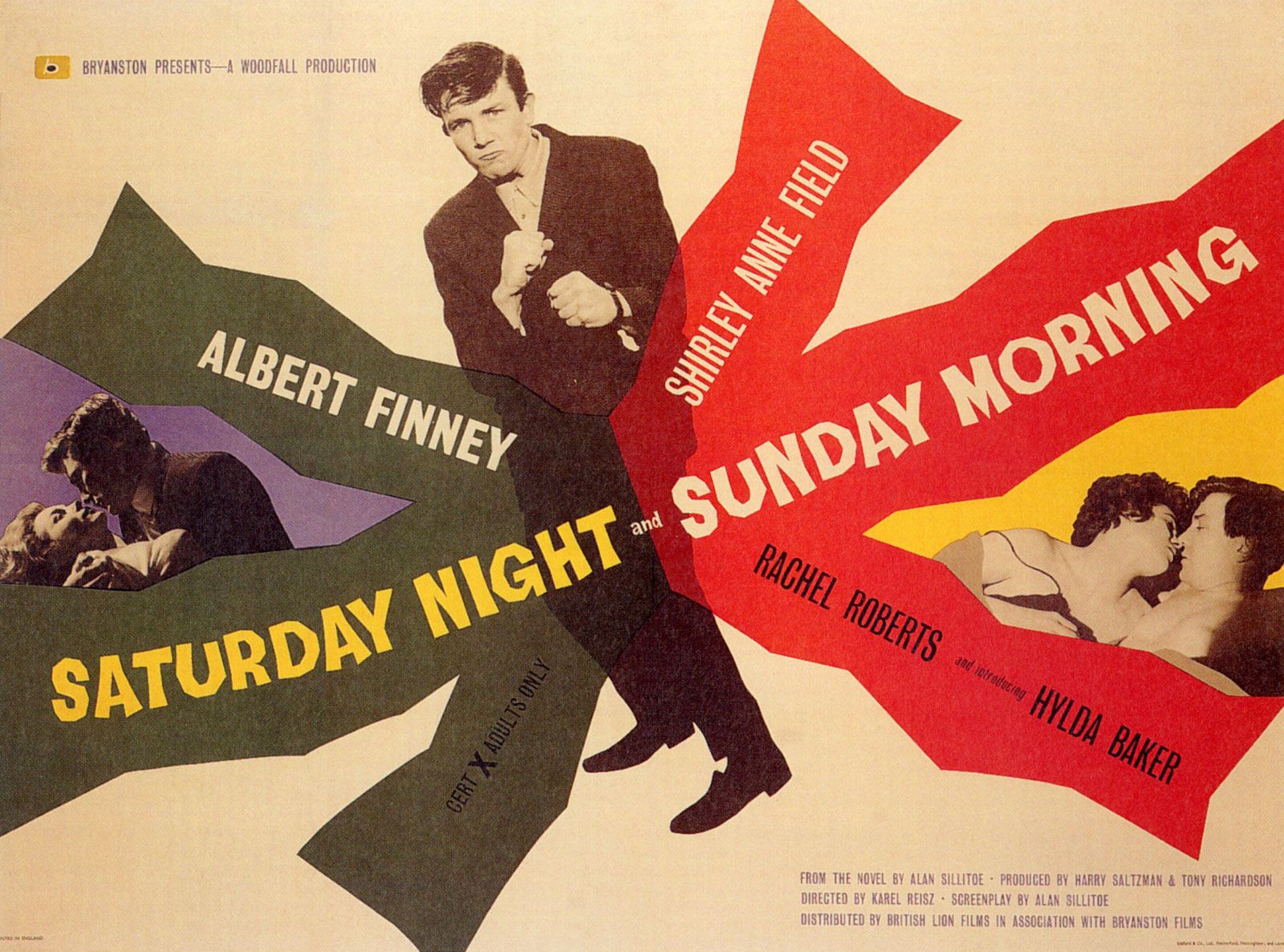
An example of kitchen sink realism genre, it is a film about nothing and about everything at the same time. I think whether it is a good film is a question without a definite answer, as it entirely depends on the viewer's personal history and outlook. For some, it will be a boring picture about nothing; yet others will see it and say "yeah, life is like that, ain't it duck?"
A picture about nothing
Why is it about nothing? It only shows a few days in life of a group of people, and during those days nothing especially important of exciting happens. There is work being done, sex being had, rent being paid, booze being drunk, relationships being established, pregnancies being aborted, etc. The plot, such as it is, is just the "adventure" of life of one angry young man.
There is nothing ground-breaking, nothing heroic, nothing immediately inspiring. It is just... life as it is. You enjoy the Saturday night, you rest on Sunday morning, and you go work on Monday morning.
A picture about everything
Why is it about everything? For many people, such things are all that there is to life.
There is more to life than what my parents have.
Not saying it is a bad life, but it is nothing out of the ordinary either. It revolves around the kitchen sink, both metaphorically and literally.
Times change, life doesn't
For all the technological progress that has been made since the early 1960s life is pretty much the same. It can be packed fuller of small comforts, but it is essentially unchanged. For people who do reach the milestones depicted in the film, life's main storyline remains the same and it is only the details that change.
Some things have gotten much easier eg, getting a TV; some things have gotten much more difficult eg, buying a home; while some are near impossible eg, getting into a relationship. I think this is the biggest change. The small comforts are ever more accessible, while the important goals become more and more unattainable.
Two more quotes from Arthur illustrate that the nature of life for the working class has not changed much since the 1960s.
I work for the factory, the income tax, and the insurance already.
After they have skinned you dry, you get called up in the army and get shot to death.
They are as valid in late 2020s, as they were in early 1960s.
Working-class people are still primarily working for the income tax and various bills and costs, and whatever is left as "discretionary spending" is a mere fraction of their gross salary.
Those same people will be discarded once they can no longer work; or, seeing how Russia is as Soviet as in the 1960s, will get shot to death. The message about people only having value as long as they can work for the system was delivered even better by Upton Sinclair's The Jungle.