Midnight Library
Published:
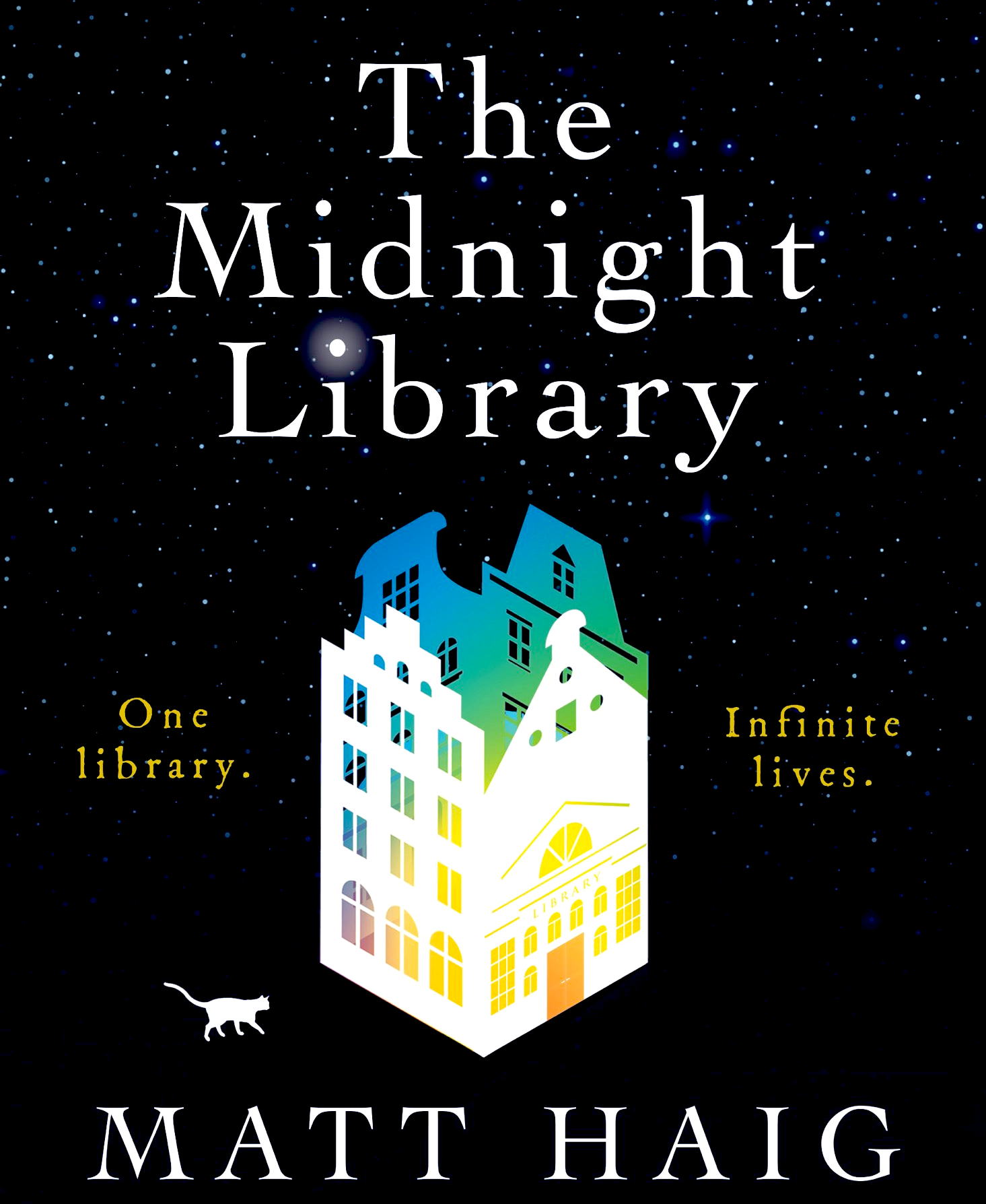
"The Midnight Library" by Matt Haig is another recommendation I received from a friend. She also recommended I read The Course of Love. Both books are great.
The first chapter of The Midnight Library opens with a simple sentence that sets the tone:
Nineteen years before she decided to die, Nora Seed sat in the warmth of the small library at Hazeldene School in the town of Bedford.
Declaring that the main character will commit suicide is certainly a way to start a book. It removes all doubt about what will happen, but leaves the question of how unanswered. The book caught my attention immediately, and held it until the very end.
I am not going to summarise the plot here, or judge the book it on its literary merits. I enjoyed reading it, and this must be judgement enough. What I think is more important is the lesson the book tries to convey, and not the words it uses to convey it. For all it is worth, Nora Seed could be Charlie Chaplin, the names are not relevant, because they just identify characters; the characters, however, embody certain archetypes, and those are the relevant bit.
The essence
The essence of the book is the question that I have talked about numerous times with different people: if you could go back in time and change anything in your life, would you do it, and what what would it be?
The Midnight Library, as it appears in the book, is a reificiation of that question. When Nora Seed, the main character, steps onto the death's doorstep after committing suicide, she arrives at a library suspended in the realm between life and death. Inside the library are thousands upon thousands of books, each describing a different variation of her life.
There are not only books inside, however, Nora also find there Mrs Elm, the school librarian she remembers from her childhood. As the story progresses, Mrs Elm turns from an unexpected ghost into a spiritual guide, helping Nora explore various lives, solving regrets, and, ultimately reaching the life that is her own. Arriving at the life, however, is not an easy task, and requires her to shed the shackles put on her by the expectations and dreams of other people: her father, her brother, her fiance.
This, starting to live your own life, is a step that I think many people, myself included, need, or needed, to take at some point or another in their lives. It may not be the easiest, or the most convenient, one, but sometimes it is the only one that leads somewhere.
Becoming your own person
Surprisingly or not, his process of becoming your own person and starting to live your own life has a name: individuation. I think the concept is most commonly associated with Carl Gustav Jung, but he was neither the first person, not the last, to formulate it. Max Stirner and Friedrich Nietzsche also come to mind.
Stirner was direct and unapologetic about this idea, stating it in terms of struggle and conflict. In his view, you could not be your own person as long as you were bound by the obligations and laws imposed on you by other entities: people, the state, religion, gods, etc.
Nietsche was a bit more poetic. Gott ist tot, yes, but it does not mean that we are free to do whatever; it means that it falls unto us to define what is good, what is evil, and what is the right way to live.
I do not think Matt Haig's book is on a similar level, and I do not consider it a manifesto of extreme egoism, ruthless self-determination, or spiritual self-discovery. It is much softer in its delivery, but the core message, the essence of it, is not far removed from either Stirner's, Nietzsche's, or Jung's.
Stated simply: stop living the life others tried to impose on you, or dreamed of for you, and start living the life that you think is worth living.
Easier said than done, because sometimes it is not obvious to ourselves what it is exactly that we want, that we need, that we lack, or that we yearn for. There is just this feeling of... undirected unfulfillment, or something being wrong.
In The Midnight Library Nora succeeds in finding that missing part. This is the optimistic aspect of the book. It shows that individuation can be achieved, and that that something that would allow us to postpone suicide (maybe even until the day of our natural death) can be found. The book has an ending that inspires hope, and I find it good.
The journey
Putting on my literary-mythological hat now, I find it curious how well the story of Nora in The Midnight Library matches the monomyth ie, the hero's journey described by the comparative mythologist Josephl Campbell in 1949.

Source: Wikipedia
The Call to Adventure is Nora being fired and becoming so depressed she decides to kill herself.
The Supernatural Aid is the alcohol and overdose.
The Threshhold Guardians are the people she reaches out to, but who ignore her.
The Threshold is clearly death, which almost too fitting for a classic myth.
The Mentor must be none other than the apparition of Mrs Elm inside the Library.
The Challenges and Temptations are the lives that Nora tries. Even a devil appears, in the form of Hugo, who tempts her into trying different lives indefinitely: he is able to experience these endless possibilities, so why should Nora not be able to experience them too? Mrs Elm warns her that "Hugo's might be the privilege you do not have", but the temptation is almost Nora's downfall.
The Revelation is finding a life that is almost completely the she wants.
The Transformation comes at two points: when she fights off a polar bear, and when she finds herself with Ash and Molly (the husband and daughter she has in the life that gives her the Revelation).
The Atonement is finding the last book in the library. This is also the last Challenge, as Nora races to find the book before the library is consumed by destruction.
The Gift of the Goddess is the pen Mrs Elm gives her to start writing in that last book and return to life.
The Return is a literal return from the realm of the dead to the land of the living.
I know I enjoy stories structured like this, which is probably why I not only appreciated the message, but also like the plot of The Midnight Library.
I want to die, but I want to eat tteokbokki
The Midnight Library reminded me of the book with an unwieldy title written by Baek Se-hee that also deals with suicide and lack of the will to live.
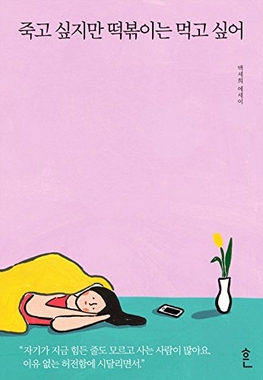
Both books reach a similar conclusion: life may not be all sunshine and roses, but as long as there is something to look forward to (even if it is as simple as eating another bowl of tteokbokki), and some hope for the future, it is a life worth living.
While I agree with this conclusion, I cannot help but see the circular logic of it which is, essentially: I want to live, because I want to live. I am sceptical of this thinking, and not just a tiny bit afraid of relying on it as the only defense against despair. After all, it takes just one crack for the circle to be broken. Even tteokbokki, or a Schnitzel, or a couple palačinke, provide something external that is independent of myself. A crutch, sure, but a crutch that can be leaned on.
As I have said in the begining of this post, a friend recommended the book to me. She knows me well, so I should not be surprised that she knows what book I would find interesting, or relatable. I will not deny there is something unsettling about relating to a book about suicide; I may laugh about it, but it is a nervous laugh, given my experience with myself.
I think despair is like alcoholism. You may have stopped drinking and stayed sober for years, but it does not take much to spiral down again.