Perfect Blue (1997)
Published:
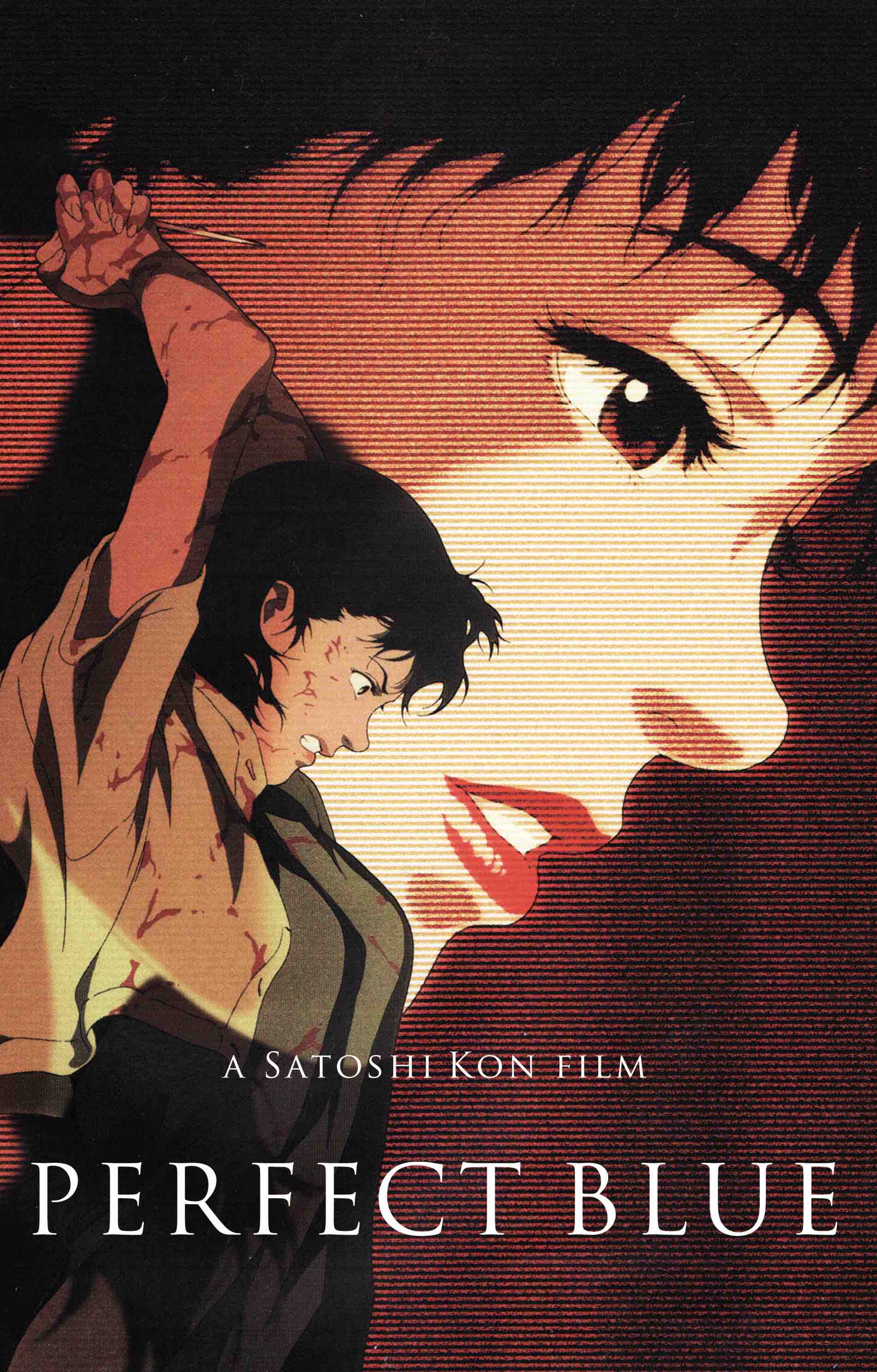
What survives when multiple manufactured images of a person collide with reality? Perfect Blue is an anime that inspires you to ask yourself this question, and provides an approximation of an answer.
While I was watching the film, I could not help, but think of Paranoia Agent (no wonder, given that both were directed by Satoshi Kon) and Ghost in the Shell. All three deal with the question of what is real, and what is the "self" of a person, but each work approaches it from a different angle.
However, compared to Ghost in the Shell and Paranoia Agent, Perfect Blue is not only concerned with psychological and philosophical questions, but also with a real problem existing in a physical reality: obsessive psycho-fans. You only need to look at what happened to aespa's singer Karina to see that the film's events are not that far removed from reality. Parasocial relationships, obsessive preoccupation with celebrities' lives, and unhealthy idealisation or identification with an image are not, sadly, things only existing in the realm of fiction.
The image
The first few scenes of Perfect Blue show the film's protagonist, Mima, ending her career as a pop idol and entering the world of acting, with her first role being a secondary character in a crime drama. From those first few scenes we learn who the main character is and whom she aspires to be, in what environment does she exist, and we also get a glimpse of a person who is clearly positioned as the antagonist. This is very efficient, no-bullshit storytelling.
As the story progresses, it becomes apparent that not everyone is happy with Mima's transition from being an innocent singer in a girl-band to being an actress who takes part in nude photo-sessions and shoots rape scenes. This conflict between two manufactured personas (and the real Mima caught between them) becomes the background for everything else that will happen in the film.
One of Mima's managers, Rumi, shows her a website called "Mima's Room" which is a blog that appears to be written by Mima. It amuses her at first, but soon she becomes terrified and paranoid when she discovers that some posts have a few too many details that match her real life too closely.
That is when the slow descent into insanity starts for Mima, and when the film starts showing several Mimas in parallel:
- the real Mima
- the one on the crime drama
- the one presented on "Mima's Room" website
- the one she imagines to see
I liked how the film blurred the boundaries between all Mimas by reusing scenes, mirroring what happened in real life and in the screenplay of the series Mima was starring in, and what was described on the "Mima's Room" blog.
The point where real Mima reads the blog and thinks to herself "maybe that's what I did today" was very different from that scene in Ghost in the Shell where the garbage truck driver learns that the memories of his family were implanted in him and not real, and yet, from my point of view, they carried very similar meaning.
How do we know what and who we are, and what is the true version of our self, when we are not sure what is real? If we are unable to ground ourselves in reality, when we lose grasp of some external, objective source of truth, and everything starts revolving around our memories and perception... how are we supposed not to spiral out of control?
It is like that party game when you get blindfolded, then you get spun around to lose sense of direction, and then you have to find something or someone, and everyone has a good laugh at your expense as you fumble around. Except in the case of the party game, you can at least touch things and hear people laugh, so you have some external objects and signals you can use to find your orientation and navigate around; you still exist in and are connected to the real world. If you lose sense of reality, and not just direction, then you have almost no tools to find your way back, because there is nothing you can trust to be a guiding star. (Unless you are C.G. Jung on a self-inflicted journey of self-discovery.)
The obsession
The story adds a physical dimension to the psychological drama, and contrasts the decrease in sanity with an increase in violence.
First, a psycho-fan protects Mima; then he sends her an exploding threat letter; then he attacks people buying magazines with her nude photos; then he moves on to murdering people who, in his eyes, destroyed the persona he idolised so much; then finally moves on to murdering her.
However, once Mima saves herself from the psycho-fan, the film reveals that the real danger was hiding much closer to her. After it learns that the psycho-fan failed to kill Mima, the danger, which is Rumi, Mima's female manager, decides to finish her off itself...
This probably explains why Rumi cried and stopped working with Mima after she agreed to film the rape scene: it was a violent break with her, now obsolete, image of an innocent pop-idol girl, and too much to handle for a person obsessed with that image. Rumi, being a failed ex-idol herself, identified with Mima so strongly that at some point she merged, and then wholly replaced, her own personality with the imagined personality of Mima-the-pop-idol. The real, now-actress Mima threatened that image by being a living proof that the image was not real, and had to be removed to protect it.
The idealisation and identification
There are surely things to be said about identification with or idealisation of an image, or living life through someone else.
People idolise and identify with celebrities to, I suppose, be able to imagine a life of fame and good fortune. Then they get angry and violent when their idols stop conforming to the image, or break it somehow.
Parents project their unfulfilled life goals onto children, and force the children to strive to achieve those goals as if they were their own. Then they get angry and violent when their little fulfillment vehicles grow up, get ideas of their own, and stop conforming. The children may then realise that they lost opportunities to have fulfilled their own dreams, and the cycle repeats.
We think of ourselves as being some way, and representing some values. Then, we fail to live up to our own standards, and get angry, violent, or depressed, when we see us destroy the image we held of ourselves.
I think the struggle never ends, and lasts for as long as we are alive.
The id wants something; the super-ego restricts it; and the ego must do its best to somehow accommodate both. And we, the self, are constantly caught in this conflict, trying to navigate life in such a way that neither Scylla nor Charybdis devours us.
This post got more than a little bit unfocused, but what I think I want to say is that identifying with and orienting yourself on something that is not real is not the best way to live. It is like getting hooked on the BTL, better than life, chips from Shadowrun; sure, you might enjoy the high for a moment, but the eventual crash will be crushing.
To steal from Woods of Ypres, you may despise the life you have (like Mr Me-Mania from Perfect Blue mostly probably did, what little is shown of his personal life is filled with computer screens, wires, darkness, and posters of Mima), but this life is the life that you have, not any other one.
I can be thankful to be alive
But I despise this life
In all my years that passed
I only learned just to survive
I do not think trying to live through someone else, or pretending to be someone else, will magically change the reality of you being you and having your life.
It is what it is.
If the it that you have is not the it that you want, you only have two options: do something about it, or do nothing about it. Whatever option you choose, though, I would ask you not to be the reason that people feel pleas not to murder people need to be published.
I will end this post by showing a poster for Perfect Blue that I really liked:
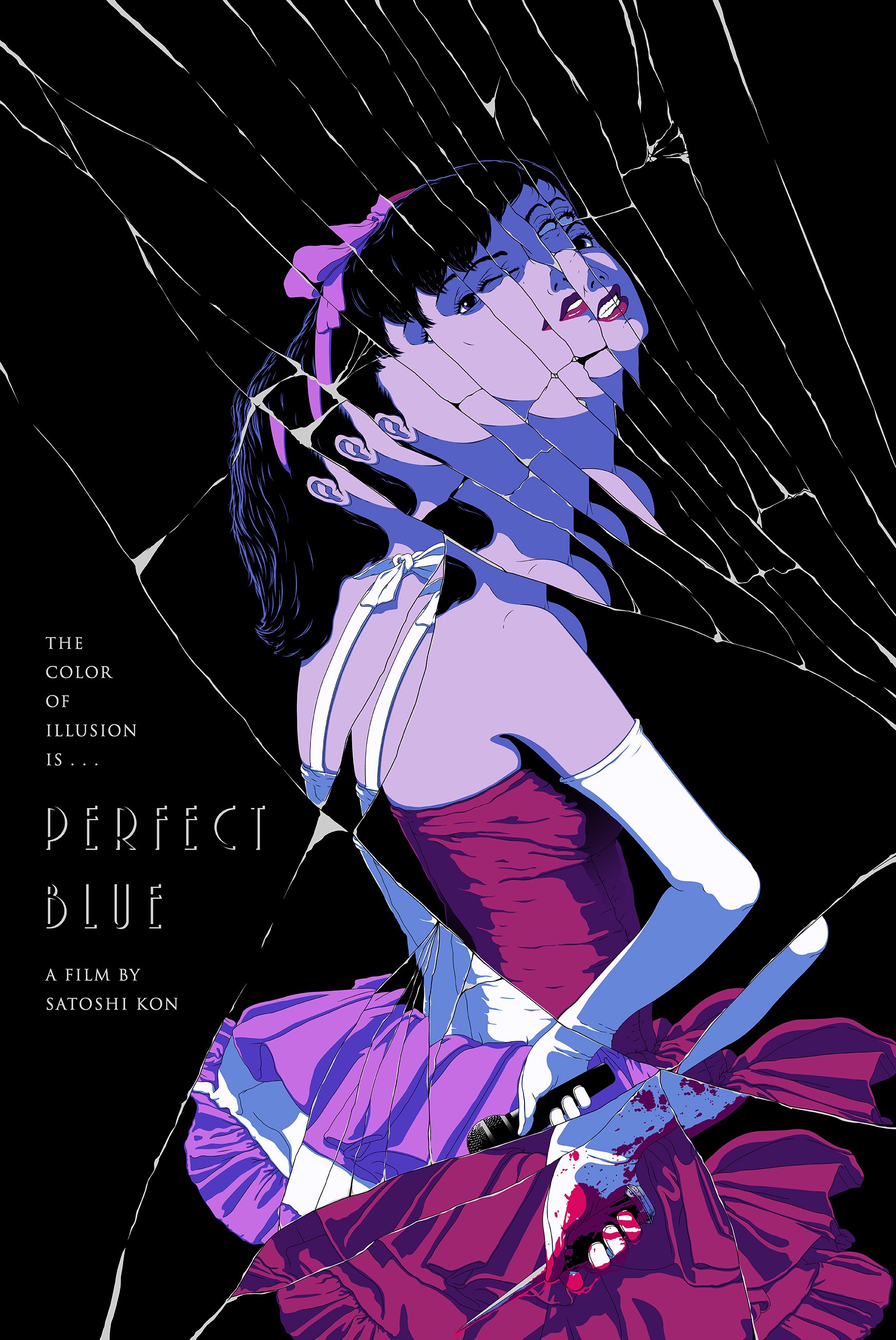
I think it shows the "split personality" aspect of the film in a great way.