"It is about the bomb."
Published:
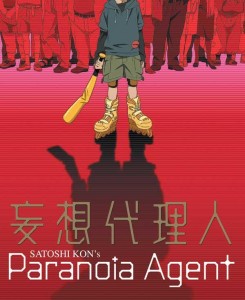
A 2009 article about Paranoia Agent, and anime series by Satoshi Kon.
I found the statement, in the form of a short story, that Seth Mlawski used to open the article interesting:
Back in college, a friend of mine asked me to take a course on modern Japanese literature with her. Being my snarky self, I said, «Why should I do that? I already know the answer to all the books. If I took this class, I guarantee all of the essays would have the same exact thesis:
‘It’s about the bomb.’»
Whether or not I was right about modern Japanese literature, the interesting thing to me is how little this thesis applies to anime and manga.
Mlawski then goes on to say that he was shocked that Paranoia Agent is "clearly about the bomb". I have watched Paranoia Agent and I certainly think it is a good anime, but my reading of it was almost the total opposite. Everyone interprets art and media through their own lens, so it is nothing unexpected to have a different view. It just surprises me how vastly different the interpretations can be.
The unresolved, repressed trauma
As far as I understand it, Mlawski's point is that Japan, as a society, is traumatised by having been bombed during World War II, but instead of addressing this trauma, Japan retreats into cutesy anime to shield itself from it. The unhealed wound then shows in Japanese art in various ways, either by making the bomb the explicit subject, or subtly manifesting itself through symbols and allusions.
I disagree. Looking at Japan from the outside, it seems to me that they have built a strong, well-functioning modern society. They have high-tech industry, research facilities, reliable transport infrastructure (I cannot describe how much I envy them their high-speed train network, which would be great to have in Europe), cultural relevance, and soft power.
That is not to say that Japan is without its problems. Their work culture is so insane that karoshi is a thing. The fabric of their society is fraying (as evidenced by hikikomori) in various places.
But it is not a uniquely Japanese problem.
Look at neighbouring China, with its own insane 996 work schedule; the resulting rat-race rejection of tǎng píng and bǎi làn; and the Sanhe Gods.
Look at Europe with its NEET and quiet-quitting; large parts of society in slow-burning depression, burnout, or troubled by suicidal ideation; and either repressing their problems, overmedicating, or attempting pointless therapy (been there, done that). Not to mention useless arguments about privilege, oppression, and that a hundred years ago someone who has already died did something to someone who has been long buried too.
Look at Korea, with its n-po generation.
Modern societies globally have problems they refuse to acknowledge and address, and would rather pretend they did not exist.
Do many of the problems have sources in events that happened in the decades before or after World War II? Undeniably yes. But the plagues of crony capitalism, oligarchy, and communism (or, to group them all together, savage authoritarianism) that have been ravaging the people in industrialised states did not suddenly spring into existence by an atomic explosion. Take The Jungle, written by Upton Sinclair in 1905, which depicts savage exploitation of the working-class in the United States of America four decades before the bomb; and The Gulag Archipelago, written by Aleksandr Solzhenitsyn in 1973, which depicts savage repression of people in the Soviet Union three decades after the bomb. Neither the US nor USSR had their cities flattened by nuclear mushrooms, and yet...
So no, I do not think the bomb is the problem.
Which way does the mirror point?
Mlawski's point is that Paranoia Agent is about the bomb. Characters in the anime find solace and relief in being victims of Shonen Bat's violence, because it lets them escape the drudgery, stress, and struggle of everyday life (even at the cost of life); people in Japan find solace in the cuteness of anime, because it lets them escape the trauma of having been bombed.
I am not buying this reading.
Actually, when I started writing this post I thought I only mildly disagreed with Mlawski, but now that I am halfway through writing the post and have given the topic some consideration, I wholesale reject his thesis. Maybe because I am not subscribing to the notion that being a victim somehow entitles one to perpetual special treatment?
From my point of view, Paranoia Agent is not about the bomb. Instead, it shows that widespread isolation, frustration, depression, loneliness, and burnout are as destructive as the bomb. To illustrate my point, I will use the same quote that Mlawski uses to illustrate his:
I’m not going to say much because I don’t want to spoil the show for you, but in the very last episode after the series’ climax, one of the main characters explicitly says, “It looks like just after the war.”
But guess what? The events that led to the "It looks just like after the war" line being said were not caused by the main antagonist of the series, the Shonen Bat, but by the paranoia and psychosis, personified by the cutesy mascot Maromi, of the main character growing so strong they physically manifested in an avatar of destruction.
To me, stating that the show is about the bomb is completely backwards. The show is a mirror between the aftermath of war and a nuclear explosion, and the aftermath of a broken society. However, what is the reality and what is the reflection? (This question is also present in Kon's Perfect Blue.)
In my opinion, the reality is the state of the society, and the reflection is the post-nuclear imagery. The way I read it, Paranoia Agent is not about the bomb; it says that you do not need the bomb to destroy society. Sow despair instead of dropping bombs, and reap suicides instead of rubble. The latter way is just more direct, spectacular, and takes a shorter time; but both are equally effective if your goal is the annihilation of people.